People get nostalgic about their first set of wheels, but those fond memories probably miss an important detail—they were often pieces of junk. Auto dealers didn’t mind.
Back in 1976, when cars on American roads were just 6.2 years old on average, new car sales accounted for nearly 10% of car registrations. As of 2019, when the average car age had doubled, more consumers were able to hold on to their cars longer or opt for used ones. By then, the share of new vehicle sales had fallen to 6.4% of registrations.
Most Read from The Wall Street Journal
- ‘Armchair Expert’ Podcast Host Dax Shepard Signs $80 Million Deal With Amazon
- PepsiCo, After Years of Price Hikes, Sounds an Alarm on Consumer Spending
- Cheetos Are the Latest Economic Red Flag
- Tony Robbins Bet $200 Million on a Green-Energy Breakthrough. Proof It Works Remains Elusive.
- Milder Inflation Opens Door Wider to September Rate Cut
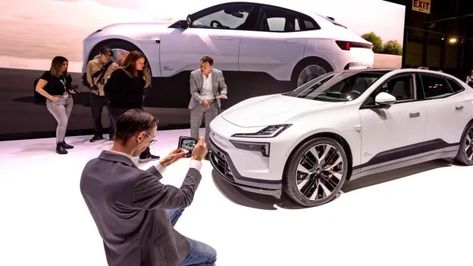
Could electric vehicles bring back those glory days of brisk sales and rapid obsolescence? In some ways, EVs resemble cellphones: Technology on them keeps improving rapidly and they are powered by batteries that degrade over time and depreciate quickly.
It is still early days. EVs make up 6.8% of U.S. auto sales but just over 1% of light-duty vehicles today. As they become a bigger part of the fleet, they could once again rev up dealers’ business—through not only faster replacement cycles but also more frequent repairs. While EVs have fewer mechanical parts, a recent study from J.D. Power showed that owners of battery EVs and plug-in hybrids took their new vehicles to the dealership for repairs at a rate three times higher than gas-powered vehicle owners did.
One reason to think EVs could accelerate replacement cycles: EV technology is improving a lot more quickly than technology for gasoline-fueled cars, which have been getting optimized for at least a century.
“The incremental improvement you see every year on [gas cars] is relatively small. When you look at incremental improvement on EV technology, that’s actually quite phenomenal, especially the battery but also the energy management in the vehicle,” said Philipp Kampshoff, a senior partner at McKinsey who leads its Center for Future Mobility in the Americas.
Consider battery life: The median range on electric vehicles was 270 miles for 2023 model year cars, up 27% from five years earlier, according to the U.S. Department of Energy. The improvement is even more remarkable on high-end EVs: Back in 2018, the longest-lasting battery could hold 335 miles of charge. Last year, the highest battery range hit 516 miles. Like iPhone and iPad makers, EV manufacturers are able to do a lot of updates over the air, but these have limits when the physical components can’t keep up with the newest updates.